

The Amalek Trap
On Israel’s Biblical Language and the Iran War

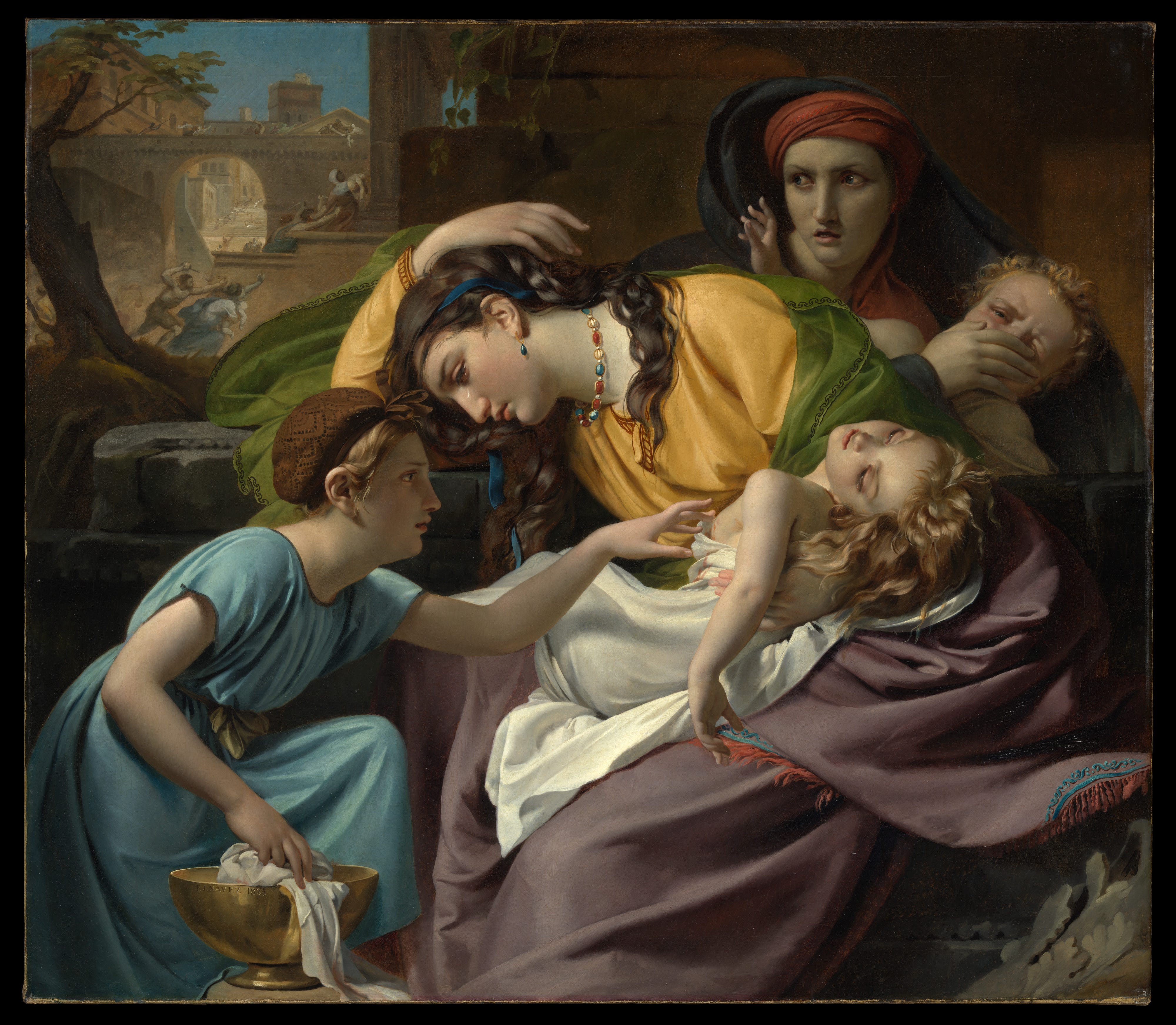
On the weekend after the first Iran strikes, Benjamin Netanyahu stood at the site of an Iranian missile impact in West Jerusalem and reached for the Torah. “In this week’s Torah portion, we read, ‘Remember what Amalek did to you.’ We remember, and we act.” The language was not new. He had used the same biblical reference during the campaign in Gaza, comparing Palestinians to the ancient enemy God had commanded the Israelites to annihilate. Now the target was different but the logic was identical.
Most commentary focuses on the genocidal implications of the Amalek invocation, and rightly so. But what the recent Amalek moment reveals about the deeper architecture of Israeli political life is more unsettling than any single rhetorical choice. The current Iran war was supposed to be a strategic military operation, coordinated with the United States, framed in the vocabulary of security and deterrence. The kind of rational statecraft that Theodor Herzl envisioned when he stood before the First Zionist Congress in Basel in 1897 and promised that Jewish sovereignty would normalize Jewish existence within the family of nations. A state like other states with diplomacy, borders, and a flag.
And yet the moment that state encounters genuine resistance, the man running it does not reach for the language of strategy or diplomacy or international law. He reaches for the language of extermination in a biblical text. The secular answer to the “Jewish Question” keeps collapsing back into something that precedes secularism entirely.
I moved to Israel in 2006 because I believed, at some level, that the Jewish Question had been answered and the answer was the state. I moved to study and ended up living there for years. I watched the architecture of occupation up close from the West Bank to Tel Aviv and co-founded a magazine that tried to tell the truth about what the country was becoming (please read and support +972, if you can). In the end, I left. And now from Cape Town I watch Netanyahu reach for the Amalek invocation against a country of 88 million people and recognize the logic I have spent the last decade trying to name. The state that was supposed to settle the question has made the question permanent.
No Middle Ground
What happened between Gaza and Iran is not a change in Israeli policy. It is a change in the scale of the claim. The Amalek invocation against Palestinians was already genocidal, but it operated within a context that Israelis could narrate to themselves as territorial and local. Gaza was a border, at least in the national imagination.
Iran has no border with Israel. There is no occupation to point to. There are 88 million people living thousands of kilometers away. And the same extermination language applies to them now without hesitation. The framework has metastasized. Amalek can be anyone. The enemy is infinitely expandable because the fear that generates the enemy is bottomless, and it is bottomless because it was never really about security. It was about justification. There is already talk that Turkey is next.
The argument I developed in The Nation last month, and that I’ve been building in this newsletter through pieces on Nathan Birnbaum and Yosef Haim Brenner and the Bundists, comes down to a single recognition. Political Zionism accepted the Jewish Question on its own terms. It internalized the premise that something about Jewish existence needed fixing and offered territorial sovereignty as the fix.
Birnbaum, who coined the word “Zionism” and then abandoned the movement within a year of the First Zionist Congress, recognized the problem before almost anyone else. Accepting the terms of the question meant building a state on the premise that Jewish life required correction. What we are watching now in the war on Iran is not a deviation from that project but its fulfillment under pressure.
Al Jazeera reported this week that an Israel Democracy Institute poll found 93 percent of Jewish-Israeli respondents support the strikes on Iran, with 74 percent backing Netanyahu. The political analyst Ori Goldberg, speaking from Israel, described a society in which an antiwar activist invited onto a television program was treated the way one might treat a flat-earther. For Israeli society, it’s inconceivable that anyone would oppose this war. Israel has become, Goldberg said, “a society with no middle ground, no capacity for conversation. It’s as if our entire existence is dependent on our ability to do anything we want. And if the world tries to stop that, then the world’s anti-Semitic, and we all burn.”
That quote describes, from the inside, the exact trap that the history of the Jewish Question makes legible from the outside. A state built to justify Jewish existence through sovereignty has arrived at the position that its existence depends on unlimited capacity for violence. Any constraint on that capacity becomes an existential threat. Any criticism becomes antisemitism. The circle closes. The cure has become indistinguishable from the disease it was supposed to treat, because the disease was always the question itself, the premise that Jewish life required justification in the first place.
Birnbaum was not alone in seeing other paths. Millions of Jews across Europe and the United States held positions that ranged from diaspora nationalism to socialist internationalism to religious anti-Zionism. Those alternatives were not defeated through debate. They were destroyed by the Holocaust, which seemed to vindicate every Zionist argument about Jewish vulnerability without sovereignty.
But what the catastrophe vindicated was not the specific political program of Herzl and his successors. It vindicated the raw fear. And a state built on vindicated fear, one that has made that fear the organizing principle of its political and spiritual life, will find enemies everywhere it looks. It reaches for Amalek because Amalek is the only framework capacious enough to hold the scale of violence it requires to feel safe.
Since October 7th, dissent in Israel could at least shelter behind concern for the captives. Opposition to the war on Iran has no such protection. Itamar Greenberg is 19 years old and an antiwar activist, one of the few willing to protest publicly in a country where 93 percent of Jewish citizens support the bombing. Al Jazeera reported that he has been spat on in the street and targeted by an online hate campaign. He laughed when asked whether he should be afraid. “Yes! If I thought about it, I probably should be. I just don’t have time.”
But it was a detail from six months earlier that stopped me. After being arrested for protesting the genocide in Gaza, prison guards threatened to carve a Star of David on his face. Sit with that for a moment. The symbol of Jewish identity, carved as punishment into the flesh of a Jew, by Jews, because he refused to accept that Jewish survival requires the destruction of others. The logic of the Jewish Question, which held that Jewish existence was an aberration requiring correction, has not been overcome by the state. It has been relocated inside it.
The state now marks its own dissenters with the symbol of belonging as a brand of exclusion. Birnbaum, who warned that a Jewish state would face the same moral corruptions that plagued all political nationalism, could not have imagined the precision of this cruelty, but he understood the machinery that would produce it.
The 93 percent support for the Iran attack is the number you get when a society has fully closed around the premise that its existence requires constant justification through force. Birnbaum warned that joining the nation-state game meant becoming what the game produces, and what it produces, everywhere and always, is a polity that cannot afford to stop. Netanyahu reaching for Amalek in the rubble of West Jerusalem is not a lapse in secular judgment. It is the confession that secular judgment was never what held the project together.
Woe to the end of our religion as a mass moral movement. Woe to the world that our people would see burn. Shame for us never coming together to condemn nuclear weapons. Shame and woe.